Iced Latte Recipe — How to Make an Iced Latte (Ratio & Shots)
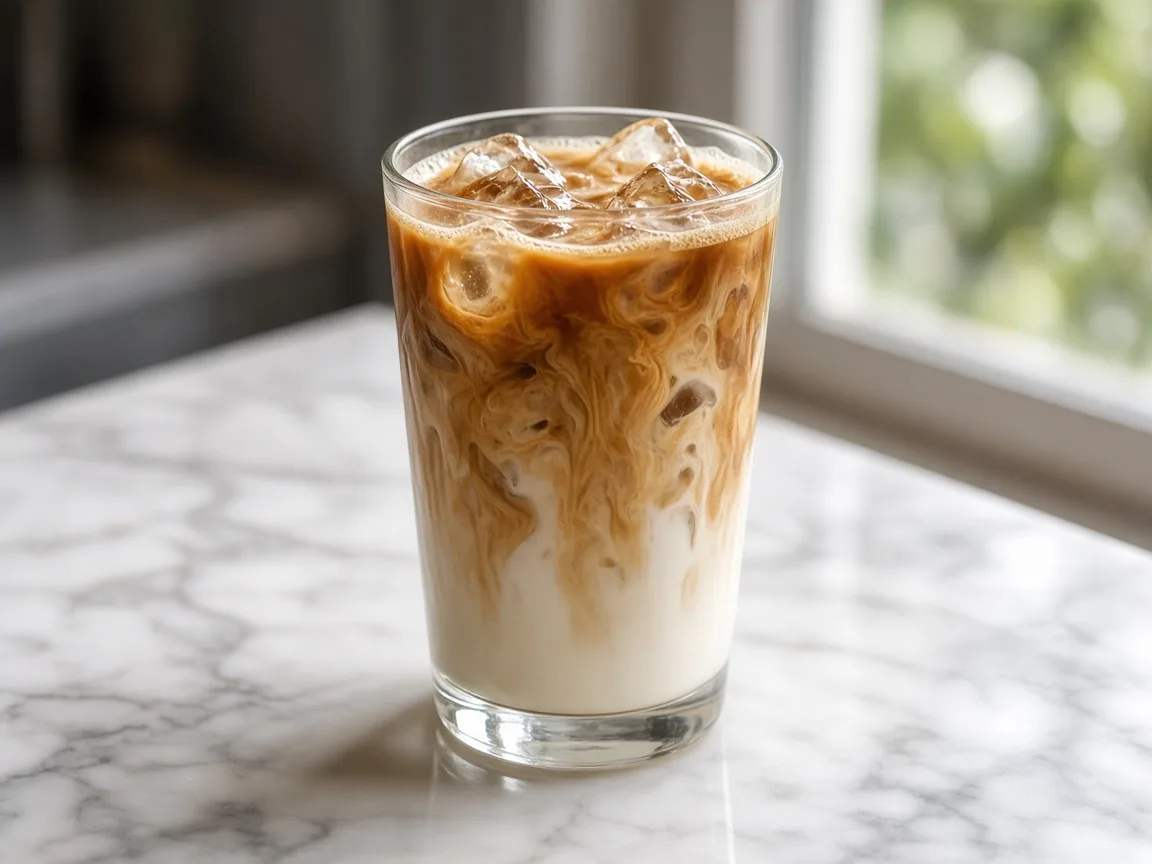
How to make an iced latte: two shots, cold milk, plenty of ice — the café ratio that does not taste like melted water.
Updated November 26, 2026
- Time
- 4 min
- Yield
- 1 tall glass (12–16 oz)
- Level
- Beginner
An iced latte is espresso plus cold milk plus ice — not leftover drip dumped on cubes. Searches for “iced latte recipe” spike every warm month because café versions are simple to copy and easy to get watery. The fix is enough espresso, enough ice, and milk that is actually cold.
Ingredients
- 2 espresso shots (50–60 ml), or 50 ml strong Moka / AeroPress concentrate
- 180–240 ml very cold milk (dairy or barista oat)
- Ice, enough to fill the glass
- Optional: 1–2 tsp simple syrup, vanilla, or brown sugar, stirred into the hot shots
Method
Fill a 12–16 oz glass with ice so cubes sit above the halfway line.
Pour in cold milk, leaving ~60 ml of space at the top for espresso.
Pull a double espresso (or brew concentrate). If you are sweetening, stir syrup into the hot shots now.
Pour espresso over the milk and ice. Stir once or twice.
Taste. If it is thin, you need more coffee or less ice melt — not more syrup first.
Watch someone make it
Video by Howcast on YouTube — helpful for technique; follow our written ratio if the amounts differ.
Iced latte ratio
Think 1 part espresso to 3.5–5 parts milk by volume, then ice on top. A double shot into 200 ml milk is the café-standard 12 oz build. A single shot in a 16 oz cup is why homemade iced lattes taste like cold milk. If you only have a Moka pot, treat 50 ml of concentrate as the double.
Milk measured before ice displacement.
| Glass | Espresso | Milk | Result |
|---|---|---|---|
| 12 oz | 2 shots (60 ml) | 180 ml | Coffee-forward, classic |
| 16 oz | 2 shots | 240 ml | Milder; add a third shot if you have it |
| 16 oz | 1 shot | 240 ml | Too weak — skip this |
Iced latte vs iced coffee vs cold brew vs shaken espresso
- Iced latte: espresso + cold milk + ice.
- Iced coffee: hot brew cooled or flash-brewed over ice, usually black or lightly milked.
- Cold brew: long cold steep; different flavor, often more caffeine per ounce.
- Shaken espresso: espresso shaken with ice (and often syrup), topped with a splash of milk — stronger, foamier, less milk than a latte.
No espresso machine
Moka pot, AeroPress inverted with a short brew, or instant espresso powder (about 2 teaspoons in 60 ml hot water) all work. Do not use a full mug of drip as the “shots” unless you reduce it — you will flood the milk. Strong leftover cold brew (60–80 ml) is an acceptable iced “latte-ish” drink but it is not the same as espresso.
Ice and watering down
Warm milk plus three cubes is how you get beige soup in ten minutes. Use a cold glass, cold milk, and lots of ice. Pull espresso last so it does not sit and cook the ice before you pour. If you batch for the office, keep shots and milk separate until you drink.
Calories and caffeine
Caffeine is basically the shots (~120 mg for a double). Calories are the milk: skim ~80–100 kcal in 200 ml, whole ~120–150, oat barista often similar to 2%. Syrup is extra. An iced latte is not a protein coffee unless you add powder — mix powder into milk first if you go that route.
Pro tip: Sweeten the espresso, not the whole glass. Syrup dissolves in hot coffee; it sinks in cold milk and you get a sugar layer at the bottom.
Oat milk iced latte
Barista oat is the default café milk for iced lattes because it foams a little when you swirl and tastes sweeter than dairy without added syrup. Regular drinking oat can taste watery and separate over ice — look for “barista” on the carton. If oat tastes chalky, your espresso is too light or under-extracted; fix the shot before adding more syrup.
Order of build (milk first vs espresso first)
- Milk first (this recipe): café default, pretty layered look when you pour shots last.
- Espresso first: sweeter integration if you stirred syrup into the shots; looks less layered.
- Never: hot espresso sitting on three cubes for five minutes before the milk — that is melt city.
Starbucks-style vs home glass
A grande iced latte is mostly milk. Copy the café vibe with two shots in 16 oz and barista oat; copy a stronger specialty shop latte with three shots or a smaller glass. “Copycat” searches usually want vanilla syrup — stir 10–15 ml into the hot espresso before the milk.
Tools & guides for this drink
Pair the recipe with a calculator or brewing guide when you want numbers or a better espresso base.
Frequently asked questions
What is the iced latte ratio?
About two espresso shots (50–60 ml) to 180–240 ml cold milk, plus ice. That is roughly 1:4 espresso to milk. One shot in a large glass tastes like milk.
Can you make an iced latte without an espresso machine?
Yes. Use 50 ml strong Moka pot coffee, AeroPress concentrate, or instant espresso. Cold brew works in a pinch but tastes different.
Is an iced latte the same as iced coffee with milk?
No. Iced coffee starts as brewed coffee. An iced latte starts as espresso (or a true concentrate) plus more milk.
How do you keep an iced latte from getting watery?
Cold milk, lots of ice, espresso poured last, drink it soon. A third shot in a 16 oz cup also helps if you sip slowly.
How many calories in an iced latte?
Mostly from milk. About 180–240 ml of 2% milk is roughly 90–120 kcal before syrup; whole milk and sweetener push it higher. Use the coffee calories calculator for a custom build.
Iced latte vs cold foam cold brew?
Different drinks. An iced latte is espresso + milk + ice. Cold foam cold brew is cold brew topped with frothed cold milk or cream — usually less milk mixed into the coffee.
What milk is best for an iced latte?
Cold dairy or barista oat. Avoid warm milk and thin plant milks that separate over ice. Sweetness should come from syrup in the espresso, not from heating the milk.