How to Pull a Perfect Espresso Shot at Home
Concentrated, syrupy, and the base of every latte and cappuccino. Learn to dial in a balanced shot.
Updated June 1, 2026
- Brew time
- 25–30 sec
- Ratio
- 1:2 (18 g in, 36 g out)
- Grind
- Fine
- Difficulty
- Advanced
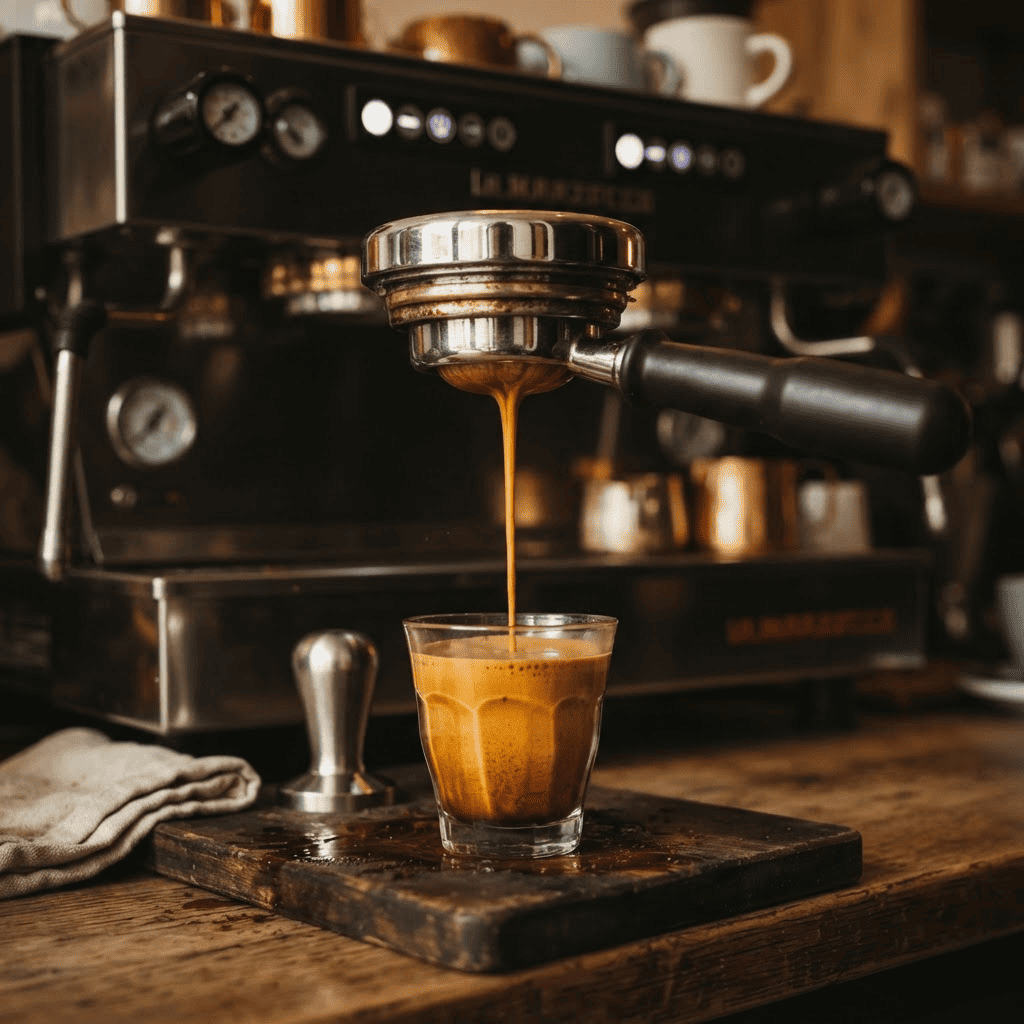
Espresso forces hot water through finely-ground, compacted coffee at around 9 bars of pressure in 25–30 seconds, producing a concentrated, syrupy shot layered with crema. It is the most demanding brew method — tiny grind changes have outsized effects — but once you understand the brew ratio as your guiding variable, dialing in any espresso becomes a logical, repeatable process rather than guesswork.
Understanding the espresso brew ratio
Modern espresso is defined by the relationship between your dry coffee dose and the liquid yield in your cup. A standard "normale" is 1:2 — for example, 18 g of coffee in produces 36 g of liquid espresso out. Ristretto shots run shorter (1:1 to 1:1.5) for a sweeter, more viscous result. Lungo shots run longer (1:3 or more) for a lighter, more tea-like extraction. Brew ratio, not shot time, is the number to lock in first.
Step-by-step espresso dial-in
- 1Set your grinder to fine and purge it with a few grams of coffee to clear old grounds.
- 2Dose 18 g of coffee into a clean, dry portafilter basket. Use a distribution tool or tap to level the grounds.
- 3Tamp straight down with firm, even pressure — about 15–20 kg. Consistency matters more than force.
- 4Rinse (flush) the group head for 2–3 seconds to clear residual grounds and stabilize temperature.
- 5Lock the portafilter in and start your shot and scale simultaneously.
- 6Stop extraction at 36 g of yield. Note the total time.
- 7Taste before adjusting. Sour and under 25 seconds: grind finer. Bitter and over 35 seconds: grind coarser.
Pro tip: Keep a shot log: grind setting, dose, yield, time, and tasting notes. One variable per adjustment. Your grinder may need several iterations to settle into a new setting — do not chase a single shot.
What the crema tells you
Crema forms when CO₂ dissolves into the espresso under pressure and releases on the way out. A thick, tiger-striped crema is a sign of fresh beans and good extraction. Very pale crema suggests old, stale beans or under-extraction. Very dark crema that disappears quickly can indicate over-extraction or too-fresh beans (under 4 days off roast). Crema is a clue, not the goal — taste always wins.
Common espresso problems and fixes
- Shot runs fast (under 20 s, thin yield): grind finer, check tamp evenness, ensure dose is correct.
- Shot runs slow (over 40 s, choked): grind coarser, check for clumps in the puck, try a lower dose.
- Bitter, harsh finish: over-extracted — grind coarser or reduce yield ratio.
- Sour, hollow, thin body: under-extracted — grind finer or increase yield slightly.
- Channeling (pale streaks in crema): uneven distribution or tamp. Slow down puck prep.
- Watery, weak shot: dose is too low or grind is too coarse for the machine.
What changes most when you switch beans
New coffees often require more adjustment than home baristas expect. Dense light roasts usually want a finer grind and sometimes a slightly longer ratio to open up sweetness. Medium-dark blends built for espresso often run faster and can become bitter if you chase the same shot time too aggressively. Humidity and bean age also matter: espresso that ran perfectly three days ago may need a finer setting today as the beans degas and dry out.
Milk drink espresso vs straight-shot espresso
If you mostly make cappuccinos or lattes, you can aim for a slightly more concentrated, higher-body shot so the coffee still cuts through milk. Straight espresso usually benefits from a more open extraction with cleaner acidity and a longer finish. Knowing which drink you care about changes how you judge the shot. A shot that feels slightly intense on its own can be perfect once milk is involved.
Daily espresso maintenance that improves flavor
- Brush old grounds from the group head and wipe the basket dry before each shot.
- Backflush on schedule and descale according to your machine manufacturer, especially with hard water.
- Purge the steam wand immediately after milk drinks so stale milk residue never reaches the next cup.
Frequently asked questions
How long should a perfect espresso shot take?
A standard double shot (18 g in, 36 g out) should take about 25–30 seconds to pull, not counting any pre-infusion. Use time as a diagnostic tool, but always let taste be the final decision. Some coffees taste best at 28 seconds, others at 35.
Do I need a special grinder for espresso?
Yes — this is the most important gear decision for home espresso. Espresso requires a fine, highly consistent grind with small, precise adjustment steps. A dedicated espresso burr grinder with stepless or micro-stepped adjustment makes dialing in far easier. A drip coffee grinder simply cannot resolve the fine adjustments espresso requires.
What is the best espresso dose?
Most home espresso baskets are designed for 14–18 g for a double shot. Weigh your basket capacity and fill to within a gram. The dose is set by your basket; the ratio is set by how long you run the shot.
What is the best espresso ratio?
Start at 1:2 (dose:yield) — for example 18 g in, 36 g out. Go shorter (~1:1.5) for a denser ristretto or longer (~1:2.5–1:3) for lighter single origins. Use a scale under the cup so you stop by weight, not volume.
Why does my espresso taste sour?
Sourness in espresso means under-extraction — water passed through the puck too quickly or the grounds were too coarse to extract properly. Grind finer by one or two clicks and pull the shot again.
Why does my espresso taste bitter?
Bitterness usually means over-extraction: grind too fine, shot too long, or temperature too high. Grind coarser slightly, or stop the shot earlier (lower yield) while keeping the same dose.
What are the best coffee beans for espresso?
For classic milk drinks, choose a fresh medium to medium-dark blend with chocolate and caramel notes — often Brazilian or Latin American lots. For modern straight espresso, try a fresh light-medium single origin and use a longer ratio (around 1:2.5). Freshness matters more than the word “espresso” on the bag.
What is a flat white coffee?
A flat white is a double espresso (or ristretto pair) topped with a thin layer of microfoam milk — less foam than a cappuccino, stronger coffee taste than a latte. Ratio is roughly 1:3–1:4 espresso to milk in a small cup.