Types of Coffee Roasts Explained — Light, Medium & Dark
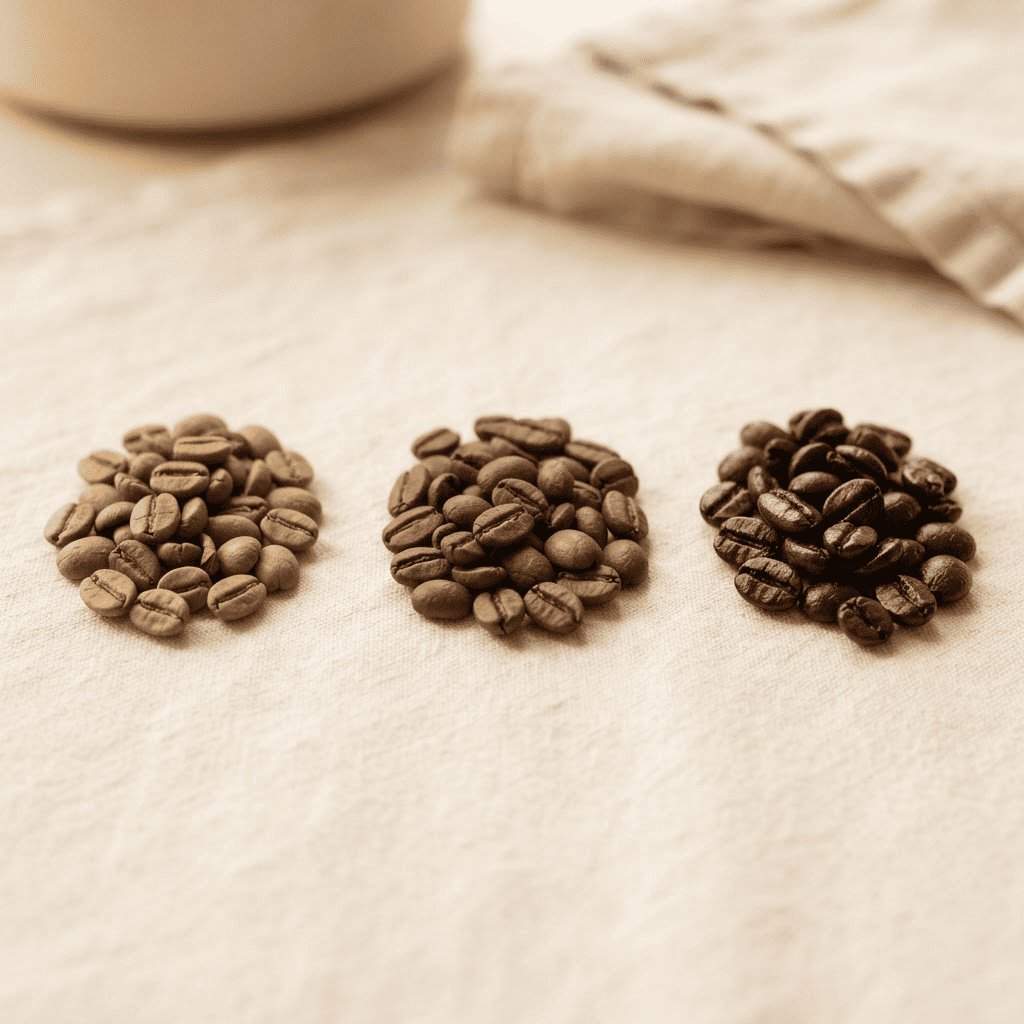
Roast level is one of the biggest factors in how your coffee tastes — often more than people expect. Green coffee starts grassy and vegetal; roasting develops sweetness, aroma, and body while gradually trading origin character for roast flavor. Understanding light vs medium vs dark roast helps you buy bags you will actually enjoy and brew them in a way that matches how the beans were roasted.
What “roast of coffee” actually means
Coffee roast level describes how far green beans were taken through the roasting process. Heat drives off moisture, triggers Maillard reactions (browning and nutty-caramel flavors), caramelizes sugars, and eventually cracks the bean as internal pressure builds. Stop early and you keep bright acids and floral or fruity notes from the origin. Roast longer and those notes fade while chocolate, toast, smoke, and bittersweet roast flavors take over. The same Ethiopian or Colombian lot can taste like two different coffees depending on whether it was pulled as a light roast or pushed toward dark.
- Light roast: stopped soon after first crack — highest origin character, brightest acidity, lightest body.
- Medium roast: between first and second crack — balance of sweetness, body, and origin flavor.
- Dark roast: at or past second crack — bold roast flavor, low acidity, heavier body, less origin nuance.
First crack, second crack, and what happens in the roaster
As beans heat, water turns to steam and the structure expands until the bean audibly “pops” — first crack. That is the earliest point most drinkable coffee is finished. Continue roasting and oils migrate toward the surface; later, a quieter second crack begins as the cell structure fractures further. Specialty light and medium roasts usually live between first crack and the start of second crack. Traditional dark and French roasts push into or past second crack, which is why those beans often look oily and taste more roasted than fruity.
Pro tip: Bag color alone is a rough guide. Oil on the surface usually means a darker roast, but lighting and packaging photos can mislead. Taste notes (“blueberry,” “caramel,” “smoke”) and brew behavior are more trustworthy than a single word on the label.
Light roast coffee
Light roasts are pulled shortly after first crack. The bean stays denser, the surface is usually dry (not oily), and the cup keeps more of what the farm grew: florals, citrus, berry, tea-like acidity, and a lighter body. Specialty roasters love light roasts for single-origin pour overs because the roast does not bury the origin. That brightness is a feature, not a flaw — but if you expect grocery-store “breakfast blend” comfort, a light Ethiopian can taste sharp or sour until you adjust grind and water temperature.
- Flavor: jasmine, bergamot, berry, stone fruit, honey, citrus — depending on origin and process.
- Acidity: high and lively; body: light to medium-light.
- Best brew methods: pour over, drip, AeroPress; also excellent as modern light-roast espresso if you dial carefully.
- Brew tips: hotter water (~93–96°C / 200–205°F), slightly finer grind, sometimes a touch more dose or longer contact time.
Medium roast coffee
Medium roast is the crowd-pleaser and the best starting point for most home brewers. Enough development softens sharp acids and builds caramelized sweetness, while enough origin character remains that a Colombian still tastes different from a Brazilian. Expect milk chocolate, caramel, hazelnut, red apple, and brown sugar more often than extreme florals or heavy smoke. Medium roasts forgive small grind mistakes and work across drip machines, French press, pour over, and many espresso setups.
- Flavor: caramel, chocolate, nuts, mild fruit, balanced sweetness.
- Acidity: moderate; body: medium.
- Best brew methods: almost everything — drip, French press, pour over, AeroPress, moka pot, espresso.
- Brew tips: start with a standard 1:16 filter ratio (or 1:15 for French press) and adjust grind before changing everything else.
Light roast vs medium roast is the comparison people search most. If light tastes too bright or “tea-like,” step to medium before jumping to dark. You will keep sweetness and complexity without the smoky finish of a French roast.
Medium-dark and dark roast coffee
Dark roasts continue toward or past second crack. Sugars carbonize further, acidity drops, body increases, and origin notes fade behind dark chocolate, toast, spice, and sometimes smoke or char. Beans may look oily. Traditional espresso blends, diner coffee, and many grocery dark roasts live here because the flavor is bold, low-acid, and cuts through milk. Medium vs dark roast is mostly about how much roast flavor you want versus how much origin character you want to keep.
- Flavor: dark chocolate, molasses, toast, spice, smoke; less fruit and floral detail.
- Acidity: low; body: medium-full to full.
- Best brew methods: espresso, moka pot, French press, milk drinks; also fine as drip if you like bold cups.
- Brew tips: slightly cooler water (~88–92°C), coarser grind than you would use for a light roast, avoid over-extracting into ashiness.
Common roast names on the bag
Roasters use marketing names that sit on the same light–medium–dark spectrum. They are not standardized, but these are the usual meanings:
- Cinnamon / Light City / New England: very light — often just into first crack.
- City / City+: light to light-medium specialty territory.
- Full City / Full City+: medium to medium-dark; common for espresso-leaning roasts.
- Vienna: medium-dark, starting to show oil and roast sweetness.
- French roast: very dark, oily, low acidity, dominant roast flavor.
- Italian roast: typically as dark or darker than French — heavy roast character.
- Blond roast (popularized by some chains): a light-leaning roast marketed as milder; treat it like a light or light-medium when you brew.
Does dark roast have more caffeine?
No — not in any meaningful everyday sense. Roast level has only a tiny effect on caffeine. By weight, dark and light are nearly identical (dark can be microscopically higher because more mass is lost as moisture and chaff). By scoop or tablespoon, light roast is denser, so a scooped light roast can deliver slightly more caffeine. Brew method and dose matter far more: a big cold brew or a large drip mug will out-caffeinate a small dark espresso shot every time.
Pro tip: When people say dark roast is “stronger,” they usually mean flavor intensity or bitterness — not milligrams of caffeine. Use a caffeine calculator if you are tracking intake by drink size.
How roast level changes brewing
Roast level changes density and solubility. Light roasts are harder and less porous, so they need more extraction help: hotter water, finer grind, or longer contact. Dark roasts are more brittle and extract easily, so the same recipe can turn bitter or ashy — back off temperature, grind a bit coarser, or shorten brew time. If you brew every roast with one frozen recipe, you are not tasting the roast fairly.
- Light: hotter water, finer grind, watch for sour under-extraction — grind finer before adding a ton more coffee.
- Medium: standard recipes work; adjust grind first when taste is off.
- Dark: cooler water, coarser grind, do not over-steep French press or over-fine espresso.
- Espresso: light roasts often like longer ratios (e.g. 1:2.5); classic dark blends often sit near 1:2.
Best roast for each brew method
- Pour over / V60: light to medium — clarity shows origin; light shines if you like brightness.
- Drip coffee maker: medium — most forgiving for automatic machines.
- French press / cafetière: medium to medium-dark — body and oils suit immersion; light works if you like tea-like cups.
- Cold brew: medium-dark to dark — long steeps can make light roasts taste grassy; chocolatey darks go smooth.
- Espresso: any level can work; traditional milk drinks often use medium-dark; modern specialty shops push light-medium single origins.
- Moka pot: medium-dark to dark — heat and pressure amplify bitterness in very light roasts.
How to choose the right roast for your taste
- Choose light roast if you enjoy floral, fruity, tea-like coffees and mostly brew pour over or filter coffee.
- Choose medium roast if you want the widest brewing flexibility and a balance of sweetness, body, and acidity.
- Choose dark roast if you prefer low-acid, bold coffee or mainly make milk drinks, moka pot coffee, or traditional espresso.
- Not sure? Buy a medium single origin and a light roast from the same shop, brew both with the same method, and taste side by side.
Roast labels can be inconsistent
One roaster’s medium can be another’s light-medium. Grocery brands often roast darker overall than specialty cafés using the same words. European “medium” and U.S. chain “blonde” do not map cleanly either. Read tasting notes, look at the roast date (not only best-by), and judge by the cup: if a labeled medium tastes smoky and oily, brew it like a dark roast. If a “dark” specialty bag still tastes fruity and dry on the surface, treat it closer to medium.
Buying tips that beat the label
- Prefer a roast date within the last few weeks for filter coffee; espresso blends are often best after a short rest.
- Match roast to method: do not force a very light Nordic-style roast through a coarse French press recipe without adjusting grind and temperature.
- For milk drinks, medium-dark often cuts through better than delicate light roasts.
- If acidity bothers your stomach, medium-dark or dark and cold brew are usually gentler than light filter coffee — though individual tolerance varies.
Roast level is a dial, not a moral ranking. Light is not “better” and dark is not “worse” — they are different tools for different cups.
Frequently asked questions
What are the types of coffee roasts?
The three main types of coffee roasts are light, medium, and dark. Light roasts taste bright and fruity, medium roasts balance sweetness and acidity, and dark roasts are bold, low-acid, and roast-forward. Labels like medium-dark, Full City, Vienna, French roast, and blond roast sit along that same spectrum.
What is the roast of coffee?
Roast of coffee means how long and how dark the green beans were roasted. Light stops soon after first crack; medium balances origin and roast sweetness between cracks; dark goes toward or past second crack, trading origin nuance for bold, roasty flavors.
What is first crack and second crack?
First crack is an audible popping when the bean expands early in roasting — the start of most drinkable light roasts. Second crack happens later as the structure breaks down further; dark and French roasts are finished around or after this stage and often look oilier.
Which roast has the most caffeine?
They are nearly identical. Roast level has a minimal effect on caffeine. Any difference comes down to whether you measure by weight (dark slightly higher) or by scoop (light slightly higher because the beans are denser).
Is dark roast stronger than light roast?
"Strong" usually refers to flavor intensity, not caffeine. Dark roasts taste bolder and more bitter, but light roasts can be just as caffeinated and often more acidic and complex.
What does French roast mean?
French roast is a very dark roast — oily beans, low acidity, and dominant roast flavors like dark chocolate, smoke, and char. Origin character is mostly gone. Brew a bit cooler and coarser if it tastes ashy.
What is a blond roast?
Blond roast is a light or light-medium style popularized by some coffee chains. Expect a milder, less roasty cup than a traditional dark breakfast blend. Brew it like a light roast: hotter water and a bit finer grind if it tastes sour.
Is medium roast the best for beginners?
Usually yes. Medium roast is the most forgiving across drip, pour over, French press, and espresso, with balanced sweetness and acidity. Start there, then explore lighter or darker once you know what you like.
Light roast vs medium roast — what is the difference?
Light roast tastes brighter and more origin-driven (floral, fruity, higher acidity). Medium roast adds caramel and chocolate sweetness with milder acidity and more body. If light tastes too sharp, step to medium before jumping to dark.
Medium vs dark roast coffee — which should I buy?
Choose medium for everyday balance and versatility. Choose dark if you want low acidity, bold roast flavors, and milk drinks. Dark roast is not “stronger” in caffeine — it just tastes more roasted.
What roast is best for French press?
Medium to medium-dark suits French press body and oils especially well. Light roast works if you like a cleaner, tea-like immersion cup — just grind coarse and do not under-extract. Dark roast gives a bold, low-acid press if that is your preference.
What roast is best for cold brew?
Medium-dark to dark usually produces the smoothest overnight cold brew. Very light roasts can taste grassy or thin after a 12–18 hour steep. Chocolatey, nutty lots shine as concentrate.
Why does my light roast taste sour?
Often under-extraction, not “bad” acidity. Grind a little finer, use hotter water (93–96°C), and make sure brew time is long enough for the method. True light-roast fruit acidity is pleasant; sour saltiness means you need more extraction.
Why does my dark roast taste burnt?
It may be roasted very dark, stale, or over-extracted. Try cooler water, a coarser grind, and a shorter contact time. If every dark bag from that brand tastes ashy, look for a medium-dark instead of French or Italian roast.