Bibimbap Recipe — Korean Rice Bowl with Egg & Gochujang
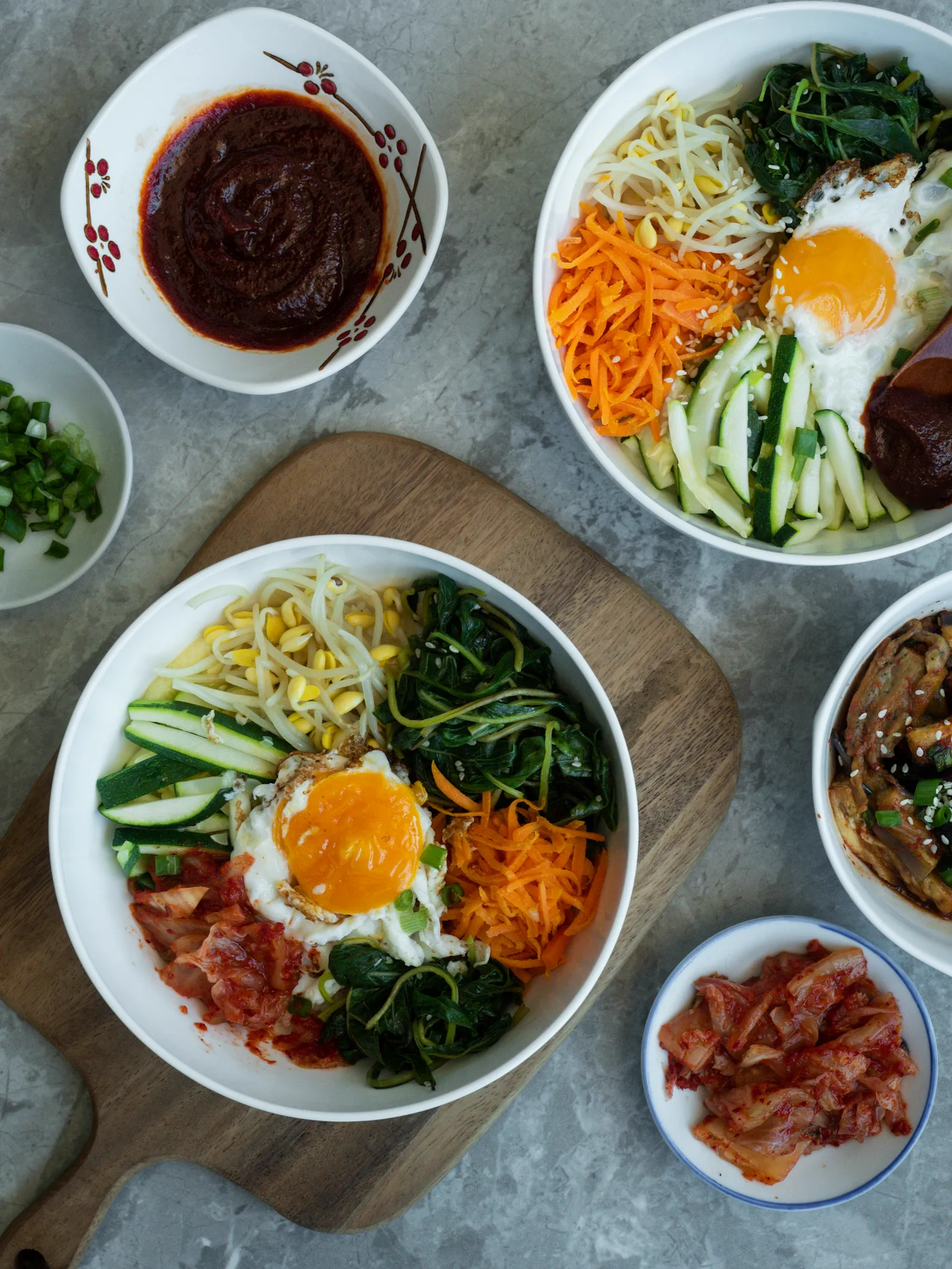
Colorful bowls of rice, veggies, jammy egg, and gochujang — mix at the table and eat.
- Time
- 45 min
- Yield
- 2 bowls
- Level
- Intermediate
Bibimbap literally means mixed rice. The magic is separately seasoned vegetables so each bite stays distinct until you stir in gochujang. It looks like a lot of steps; each veggie only needs a quick pan. This is one of the best healthy “build a bowl” dinners that still feels special.
Nutrition
Estimated per 1 bowl. Values are approximate and change with brands and toppings.
- Calories
- 540
- Fat
- 18 g
- Carbs
- 72 g
- Protein
- 22 g
- Sugar
- 8 g
- Fiber
- 7 g
- Sodium
- 890 mg
Ingredients
- 2 cups cooked short-grain or medium-grain rice (warm)
- 2 eggs
- 2 cups spinach
- 1 cup bean sprouts
- 1 zucchini, matchstick-cut
- 1 carrot, matchstick-cut
- Kimchi, for serving
- Sesame oil, soy sauce, salt, sesame seeds, sliced scallions
- Gochujang (Korean chili paste), for the table
- Optional: sautéed mushrooms or seasoned beef
Method
Cook rice and keep warm.
Blanch or quickly sauté spinach; squeeze dry and season with sesame oil and salt. Season sprouts similarly.
Sauté zucchini and carrots separately in a lightly oiled pan until just tender; season lightly.
Fry eggs sunny-side up with runny yolks.
Divide rice into bowls. Arrange vegetables in sections. Top with egg, scallions, and sesame seeds. Add kimchi on the side.
Serve with gochujang. Diners mix everything together before eating.
Do not skip separate vegetable pans
Dumping all veggies in one skillet makes a green mush. Quick individual sautés keep color and texture — that is the bowl you see in Korean restaurants. Each vegetable only needs a minute or two; line them up and work left to right while rice finishes steaming.
Rice that works for bibimbap
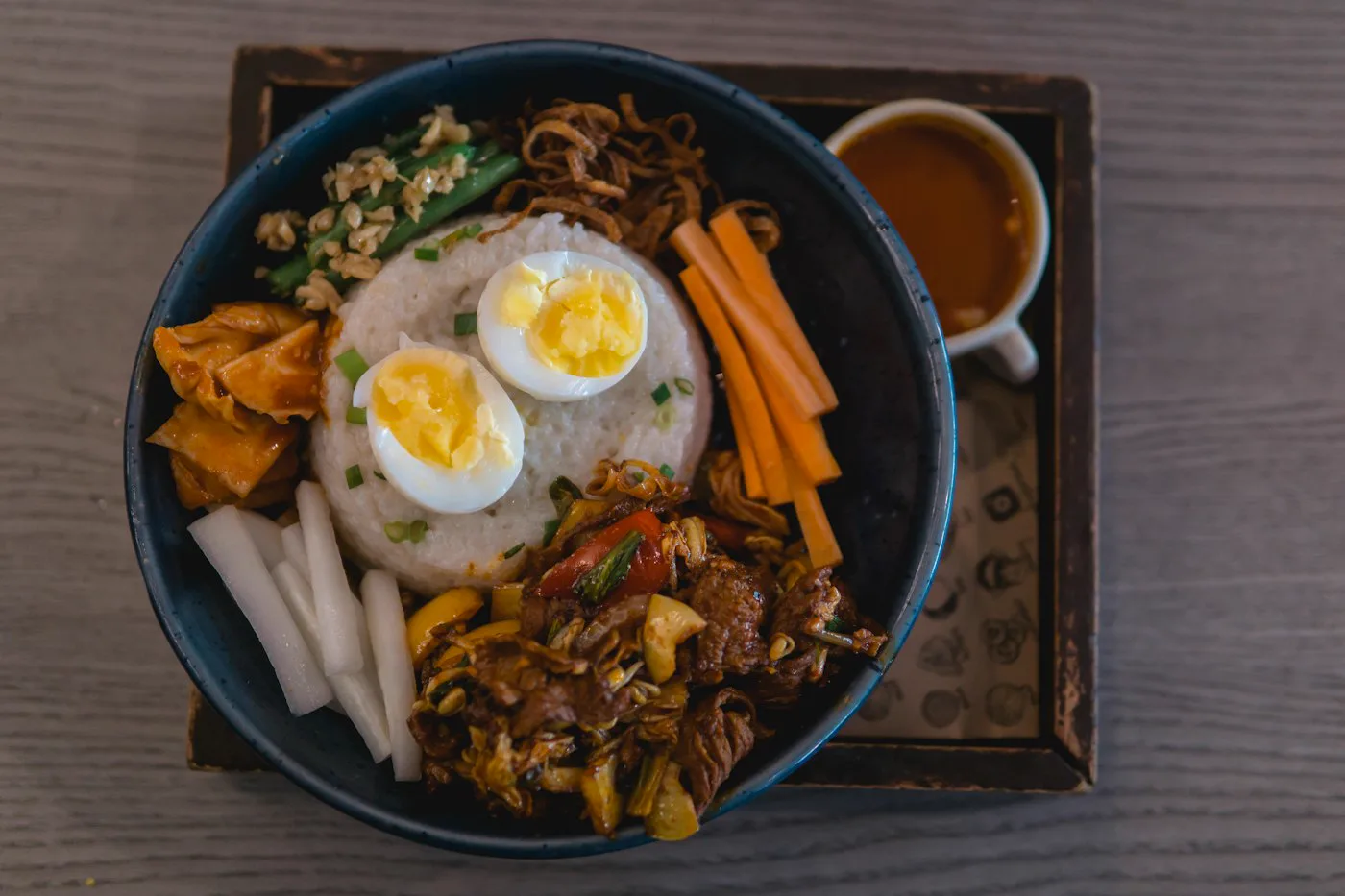
Short-grain or medium-grain rice sticks just enough so the mix holds together. Long-grain works in a pinch but feels looser. Fresh warm rice is better than cold leftover rice unless you reheat it with a splash of water so it is steamy again.
Gochujang heat control
Start with a teaspoon, mix, then add more. You can loosen gochujang with a few drops of sesame oil and water for a sauce that coats rice evenly. Store-bought gochujang varies a lot in heat and sweetness — taste before you commit to a big spoonful.
Protein options beyond the egg
- Quick sesame-soy mushrooms for a vegetarian bowl.
- Thin-sliced beef or leftover bulgogi if you want a heartier dinner.
- Crispy tofu cubes tossed in a little soy and sesame oil.
- Keep kimchi on the side so spice level stays adjustable per person.
Pro tip: Leftover bowl tip: keep components separate. Reheat rice and eggs fresh; cold leftover mixed bibimbap gets soggy.
Coffee pairing
Iced Americano (after the bowl)
Bibimbap is not a traditional coffee pairing — gochujang, sesame, and kimchi want clean contrast, not a latte. An iced Americano after (or beside) the bowl is a modern café habit: cold bitterness cools spice, dilutes residual heat, and clears sesame oil from your palate without adding dairy that can mute chili. Drink it between bites or as the finish once the bowl is mixed.
Also try: If you want coffee during the meal, keep it black and cold. Sweet milk drinks clash with gochujang; save those for dessert after.
Frequently asked questions
What is bibimbap?
A Korean rice bowl topped with seasoned vegetables, chili paste (gochujang), and usually an egg or meat. You mix it together before eating.
Is bibimbap healthy?
It can be — vegetable-heavy, customizable protein, and controlled oil. The main sodium/sugar levers are soy, kimchi, and how much gochujang you add.
Can I make bibimbap vegetarian?
Yes. Skip meat and keep the egg, or use tofu. The vegetables and gochujang carry the dish.
Do I need a stone bowl (dolsot)?
No. A regular bowl works. Dolsot bibimbap crisps the bottom rice — nice if you have the cookware, not required for a great weeknight bowl.