How to Make Protein Coffee (Proffee) — Hot, Iced & No Clumps
Mix protein into milk first — never dump powder into hot coffee. Iced and hot proffee recipes with real calorie and protein numbers.
Updated October 29, 2026
- Brew time
- 2–5 min
- Ratio
- 1 scoop + 6–8 oz coffee
- Grind
- Espresso or coarse (cold brew)
- Difficulty
- Beginner
Protein coffee — “proffee” on TikTok, protein lattes on chain menus — is just coffee plus a real protein source. Searches exploded because café versions now advertise 20–30+ grams of protein, and home versions are cheaper if you already own powder. The drink fails for two reasons: clumps, and recipes that taste like chalk. This guide is the method that actually works, plus the nutrition math people Google next.
Free toolProtein coffee calculator — protein grams, calories, and caffeineWhat protein coffee actually is
Proffee is coffee (espresso, strong drip, or cold brew) combined with whey, casein, or plant protein — usually mixed through milk so the powder hydrates. Collagen coffee is related but different: collagen peptides dissolve more easily and add roughly 10–20 g protein with less foam and less “shake” texture. Café protein lattes typically use ultra-filtered milk plus a protein booster, not a random kitchen scoop dumped into a shot.
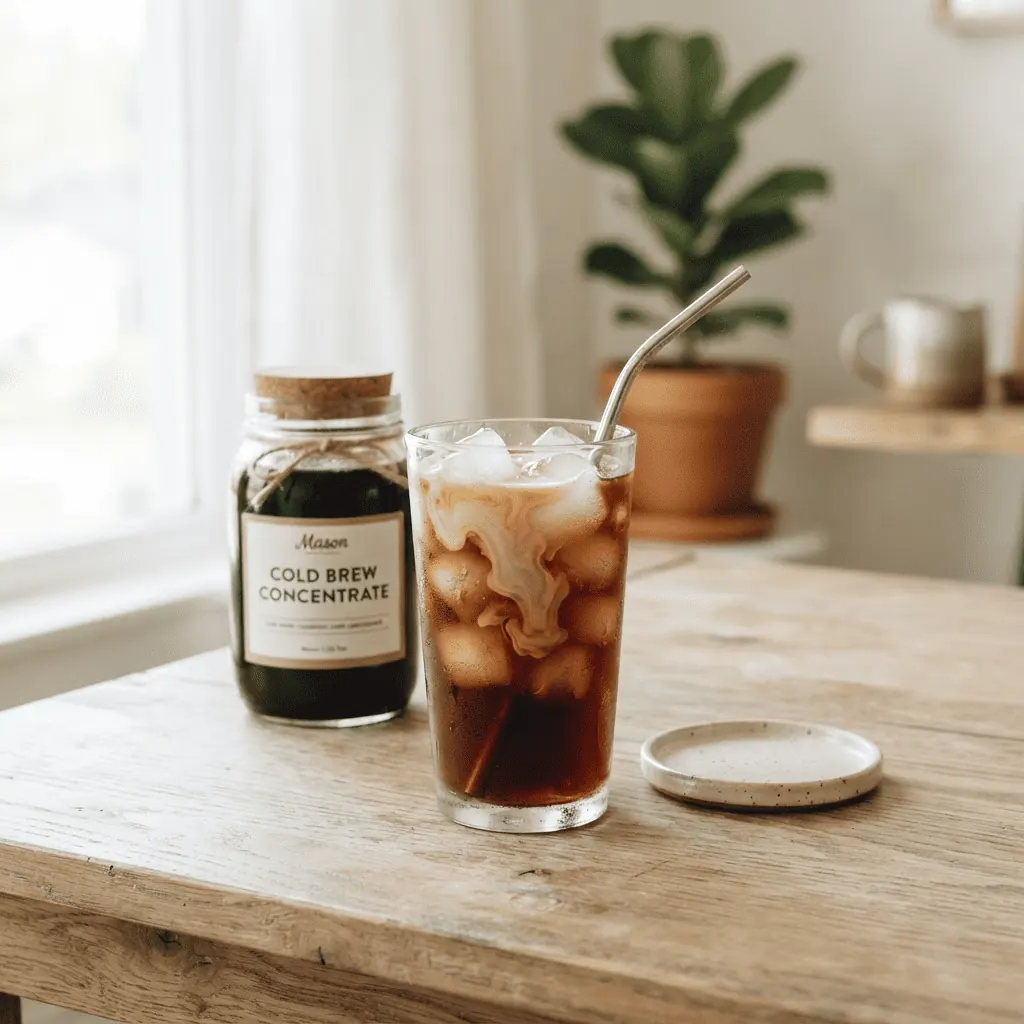
- Iced proffee: cold milk + powder, then coffee over ice — most reliable texture.
- Hot protein coffee: powder into warm (not boiling) milk, then coffee.
- Protein cold foam: half scoop + a splash of milk, frothed, poured over cold brew.
- Café-style protein latte: espresso + steamed high-protein milk (Fairlife-style or similar).
Iced protein coffee recipe (best everyday version)
- 1 scoop whey or plant protein (25–30 g powder; vanilla or mocha works best)
- 240 ml / 1 cup very cold milk (dairy, soy, or high-protein dairy)
- 2 espresso shots or 120–180 ml strong cold brew
- Ice
- Optional: 1 tsp cocoa, cinnamon, or sugar-free syrup
- 1Add milk and protein powder to a shaker bottle or jar with a tight lid.
- 2Shake 20–30 seconds until completely smooth — no dry pockets on the lid.
- 3Fill a 16 oz glass with ice and pour in the espresso or cold brew.
- 4Pour the protein milk over the coffee and stir once.
- 5Taste. If it is chalky, you used too much powder or a gritty plant blend — drop to 3/4 scoop next time.
Pro tip: Mixing powder into coffee first is how you get floaters. Hydrate the powder in cold liquid, then introduce coffee. A cheap handheld frother in a jar is almost as good as a shaker.
Hot protein coffee without curdling
Whey denatures in very hot liquid. That is why “scoop into a steaming mug” turns into rubbery bits. Keep the milk around 60–70°C (140–160°F) — hot latte territory, not a rolling boil. Whisk powder into that milk, then add coffee that has sat 30–60 seconds off the boil. Stir as you pour.
- 1Brew 180–240 ml coffee or pull a double espresso.
- 2Warm 120–180 ml milk until steaming but not scalding.
- 3Whisk or froth 1 scoop protein into the milk until glossy.
- 4Pour coffee into the mug, then the protein milk (or reverse — both work if the powder is already dissolved).
How much protein and how many calories
Numbers depend on the powder and the milk, not the coffee. Black coffee is ~2 calories. The drink is a breakfast, not a zero-cal hack.
Typical one-serving estimates — brands vary. Weigh your scoop.
| Build | Protein | Calories (approx) |
|---|---|---|
| 2 shots + water + 1 scoop whey | 22–27 g | 110–140 |
| 2 shots + 240 ml skim + 1 scoop whey | 30–35 g | 190–220 |
| 2 shots + 240 ml 2% + 1 scoop whey | 32–36 g | 230–260 |
| Cold brew + almond milk + 1 scoop whey | 23–28 g | 130–170 |
| Espresso + oat milk + 1 scoop plant protein | 20–28 g | 200–280 |
| Café grande protein latte (chain average) | 25–32 g | 250–350 |
Whey vs plant vs collagen
- Whey isolate: smoothest in iced drinks, foams well, usually 20–25 g protein per scoop. Can curdle if boiled.
- Casein: thicker, slower digesting, can get pudding-like if you over-scoop.
- Pea/soy blends: more grit; blend or shake longer. Soy milk plus soy protein stacks protein well.
- Collagen peptides: dissolve in hot coffee with almost no clumps, but they are not a complete protein and usually add less per serving.
Does protein coffee replace breakfast?
A 30 g protein drink can be a useful breakfast component — especially if it stops you buying a 400-calorie flavored latte and a pastry. It is not a balanced meal by itself: there is little fiber, and liquid calories are easy to overshoot if you add syrups. If you train in the morning, iced proffee after a session is a practical way to hit protein without cooking. If you have kidney disease or a clinician-set protein limit, do not treat TikTok macros as medical advice.
Troubleshooting
- Clumps: powder hit hot liquid first, or you under-shook. Mix in cold milk.
- Foam volcano: some whey brands foam hard in a shaker — leave headspace and burp the lid.
- Bitter or burnt: coffee was over-extracted or the powder is unflavored cocoa-heavy. Use a medium roast and vanilla whey.
- Too sweet: flavored powders plus syrup double up. Use unflavored isolate and cinnamon.
- Stomach issues: lactose in whey concentrate + milk. Try isolate, lactose-free milk, or a plant powder.
No espresso machine?
Strong drip, AeroPress, Moka pot, or leftover cold brew all work. Aim for a concentrated coffee base so milk and powder do not turn it into beige water. Instant espresso powder stirred into 60 ml hot water is a fair stand-in for two shots.
Frequently asked questions
How do you make protein coffee without clumps?
Dissolve the powder in cold milk first, then add coffee. For hot drinks, warm milk to about 65°C / 150°F before whisking in protein. Do not dump powder into boiling coffee.
How much protein is in protein coffee?
A typical homemade version with one scoop of whey and milk lands around 25–35 g of protein. Coffee itself adds almost none. Café protein lattes are often advertised in the mid-20s to low-30s depending on size and milk.
Is protein coffee good for weight loss?
It can help if it replaces a sugary café drink and keeps you full. It is not a fat-loss shortcut. Watch milk and syrup calories — those decide whether the drink is 150 or 400 kcal.
Can you put protein powder in hot coffee?
Yes if you hydrate it in warm milk first. Adding a dry scoop to steaming coffee is the usual reason it clumps or gets rubbery, especially with whey.
What is the best protein powder for coffee?
Vanilla or mocha whey isolate is the easiest for iced proffee. Collagen is easiest for black hot coffee. Avoid egg-white powders in hot drinks — they scramble-like clump.
Is Starbucks protein latte the same as proffee?
Same idea, different recipe. Chain protein lattes use protein-boosted milk systems designed not to split. Homemade proffee uses a scoop of powder. Nutrition and texture will not match ounce-for-ounce.
Beans for this brew method
Technique only goes so far on stale coffee. These whole-bean Amazon picks are solid starters for the method above.
- Check on AmazonBest overallMedium roastOften ~$30–40 / 2.2 lb
Kicking Horse Three Sisters (Medium Roast)
Organic medium roast with cocoa and stone-fruit notes — the easiest everyday bag while you learn your palate.
- Check on AmazonPremiumDark roastOften ~$16–20 / 16 oz
Death Wish Organic Dark Roast
High-caffeine Arabica + Robusta dark roast for bold cups — pair with the caffeine tracker so you do not overshoot sleep.
- Check on AmazonPremiumDark roastOften ~$18–22 / 12 oz
Counter Culture Forty Six Blend
Specialty dark blend (chocolate, smoke, full body) when you want roaster-level quality still available on Amazon.
As an Amazon Associate, KickerCoffee may earn from qualifying purchases. That never changes which products we recommend.