Moka Pot Guide: Stovetop Coffee Done Right
The classic Italian stovetop brewer. Get a rich, espresso-style cup without the bitterness.
Updated April 30, 2026
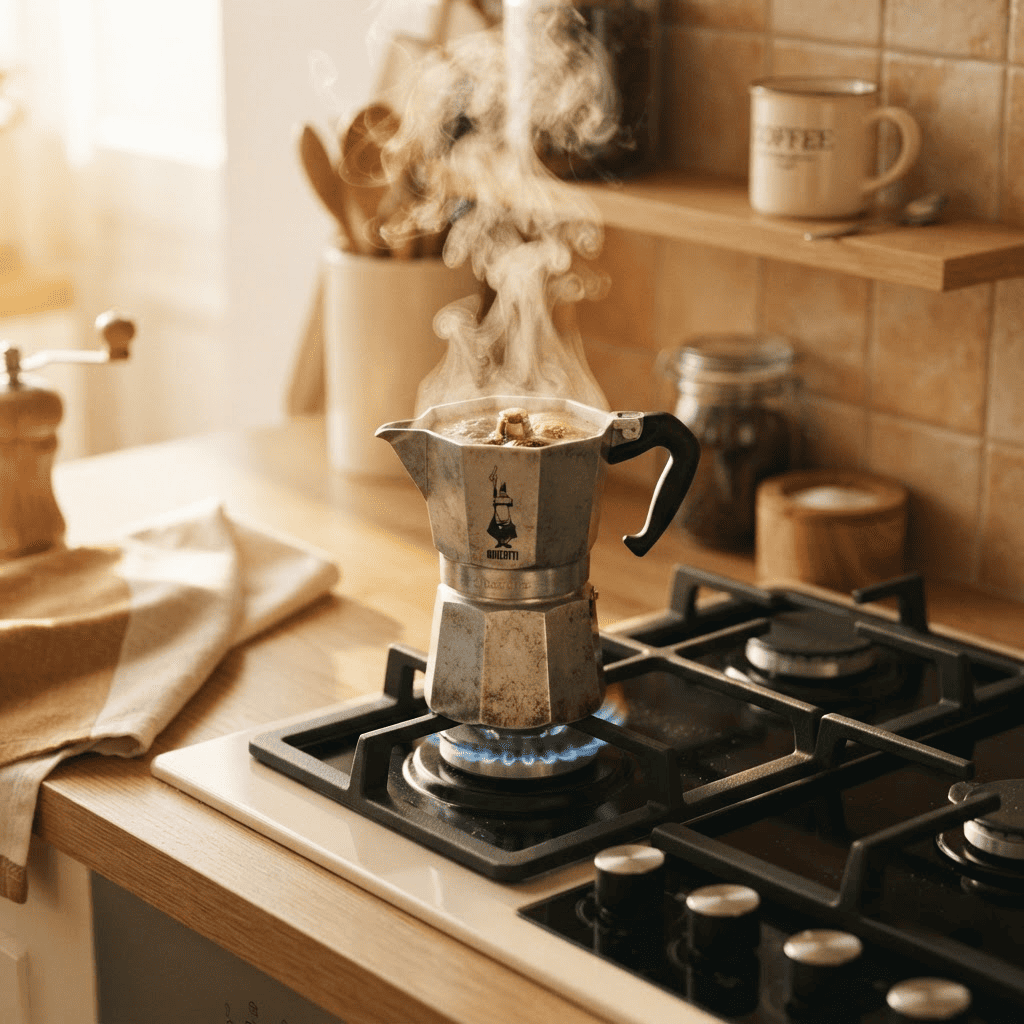
- Brew time
- 5 min
- Ratio
- Fill the basket
- Grind
- Fine-medium
- Difficulty
- Intermediate
The Moka pot is an Italian stovetop brewer that uses steam pressure to force water up through a basket of coffee grounds. Invented in 1933 by Alfonso Bialetti, it remains one of the most popular coffee makers in the world. The result is bold, concentrated, and rich — closer to espresso than drip, without needing an expensive machine. The most common mistake is using too much heat too fast, which scorches the grounds and produces a harsh, burnt-tasting cup.
What you need
- A Moka pot (2, 3, or 6-cup — the "cups" are tiny, espresso-sized)
- Medium-fine coffee grounds (finer than drip, coarser than espresso)
- Filtered water, pre-boiled
- A gas or electric stovetop on the lowest setting
Step-by-step Moka pot method
- 1Boil your water separately first — using hot water in the bottom chamber prevents the pot from overheating on the stove while water slowly warms.
- 2Fill the bottom chamber with hot water up to just below the safety valve.
- 3Grind coffee to a medium-fine texture (finer than pour over, coarser than espresso). Fill the funnel basket and level it off. Do not tamp — unlike espresso, tamping causes over-pressure.
- 4Assemble the Moka pot tightly and place it on the lowest possible heat with the lid open so you can watch the coffee emerge.
- 5As soon as coffee begins to flow — it should be a rich, dark stream, not sputtering — remove from heat immediately.
- 6Run the bottom chamber under cold water to stop extraction. Pour immediately.
Pro tip: The moment you hear a gurgling or sputtering sound is the moment to remove the pot from heat. That sound means water is running out and steam is pushing through — any more heat scorches the final extraction.
Why Moka pot coffee is not espresso
Despite the similar appearance, Moka pot coffee brews at around 1–2 bars of pressure compared to the 9 bars of a proper espresso machine. This means no crema, a slightly different extraction chemistry, and a flavor that tends toward bold and bitter rather than sweet and syrupy. It is a great, affordable espresso alternative — especially for milk-based drinks like lattes and cappuccinos — but it is a different thing.
Moka pot troubleshooting
- Bitter, burnt taste: heat was too high or you let it brew too long. Use pre-boiled water and remove from heat as soon as coffee appears.
- Coffee is weak or watery: grind too coarse, basket not filled, or you used cold water in the base.
- Coffee barely comes out, then spurts: grind too fine — it is choking the flow. Go one step coarser.
- Metallic taste: rinse the pot with hot water before each use, and run a few dummy batches with cheap coffee when the pot is new.
Best coffee styles for Moka pot
Moka pots suit coffees with lower acidity and more developed sugars because the brew is intense and concentrated. Brazilian coffees, classic Italian-style blends, and chocolate-forward medium-dark roasts tend to taste full and comforting. If you use very light beans, expect a sharper and more aggressive cup unless you manage heat extremely carefully.
How to use Moka pot coffee in drinks
A good Moka pot brew is excellent as a base for cappuccino-style drinks, iced milk drinks, or even an improvised Americano. Because it is stronger than drip but lighter than espresso, it balances well with 120 to 180 ml of hot water or a modest amount of steamed milk. This is one reason it remains a favorite in homes that want espresso-like drinks without the cost or maintenance of a machine.
Cleaning and care for better flavor
- Disassemble the pot after it cools and rinse every part so old coffee oils do not build up and turn rancid.
- Replace the rubber gasket when it hardens or cracks; worn seals reduce pressure and hurt extraction.
- Never store the pot sealed shut while damp, because trapped moisture can create off smells inside the chambers.
Frequently asked questions
Is Moka pot coffee the same as espresso?
Not quite. Moka pots brew at 1–2 bars of pressure while espresso machines operate at 9 bars. The result is strong and concentrated but without true crema. It is an excellent, affordable way to make bold coffee for milk drinks.
What size Moka pot should I buy?
Moka pot "cups" are about 60 ml each — espresso-sized. A 3-cup makes about 180 ml of concentrate, enough for 1–2 drinks. The pots only work well when filled to the correct level, so buy the size that matches how many people you are brewing for.
Can I use any coffee in a Moka pot?
Any coffee works, but medium-dark to dark roasts suit the method best. The pressure and heat tend to amplify bitterness in very light roasts. Look for beans with chocolate, nut, and caramel notes.
Do I need to clean my Moka pot with soap?
Rinse with hot water only. Soap removes the seasoning that builds up inside and can leave residue that affects flavor. Dry it fully before storing to prevent oxidation on aluminum models.