Best Coffee Scales with Timers for Precise Brewing
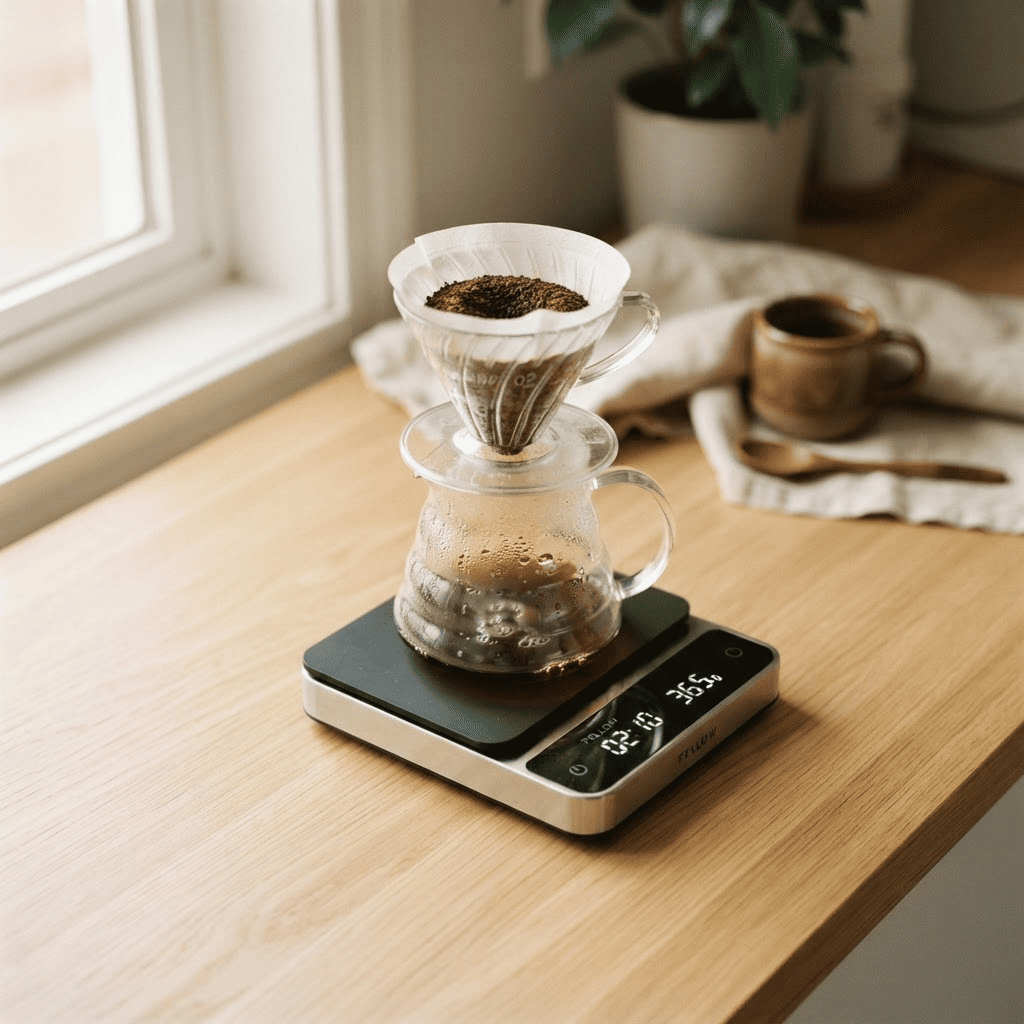
Scooping coffee by volume is wildly inconsistent because beans vary in size and density. A scale lets you weigh a precise dose and track water in real time, so a great cup becomes a repeatable cup.
What we like
- Repeatable ratios every brew
- Built-in timers track extraction
- Affordable entry point
Keep in mind
- Cheap scales can be slow to respond
- Espresso needs a fast, small-footprint model
Features that actually matter
- 0.1 g resolution for espresso; 1 g resolution is fine for filter and French press
- A fast response rate (refresh rate) — slow scales lag behind your pour and cause overshooting
- A built-in timer so you can track brew time without a separate device
- Auto-tare (zeroing) when you place a vessel on it
- Water resistance or splash-proofing for the inevitable spills
- A small footprint if you plan to use it under an espresso portafilter
Why weighing beats scooping
A tablespoon of medium-roast ground coffee weighs about 5–6 g. A tablespoon of coarsely ground light roast might weigh 4 g. A tablespoon of compacted dark roast can hit 7 g. That is a 75% range of variation from the same scoop — enough to mean the difference between a great cup and a frustrating one. Weighing eliminates this variable entirely. Once you start using a scale it is hard to go back.
Budget vs premium scales
A basic $15–$25 kitchen scale works for filter coffee. For pour over and espresso, invest $50–$80 in a dedicated coffee scale with a fast response rate and a built-in timer. The fast response rate is the critical difference — cheap kitchen scales often lag 2–3 seconds behind, which makes controlling pour weight nearly impossible.
Pro tip: For espresso, use a scale that fits under your portafilter. Most portafilters sit about 3–4 cm off the drip tray — thin-profile scales like the Acaia Lunar or Timemore Black Mirror Nano are designed for this.
Frequently asked questions
Do I need a coffee scale or will a normal kitchen scale work?
A normal kitchen scale works for basic brewing, especially French press or batch brew. Dedicated coffee scales become worthwhile when you need faster response, a built-in timer, or a small footprint for espresso. The key is weighing your coffee and water somehow, not guessing by volume.
What resolution should a coffee scale have?
For pour over, drip, and French press, 1-gram resolution is acceptable, though 0.1 gram is nicer. For espresso, 0.1-gram resolution is strongly preferred because small dose and yield changes have a big effect on the shot.
Why do coffee scales need fast response time?
If the display lags behind your pour by a second or two, you will overshoot your target weight constantly. That is annoying in pour over and especially costly in espresso, where a couple extra grams can change the balance of the shot.
Is a timer on a coffee scale actually useful?
Yes. Brew time and brew weight work together, so having both in one place makes it easier to repeat recipes and troubleshoot bad cups. It is not mandatory, but once you use one, it is hard to go back.
Ready to buy?
We keep an up-to-date list of current recommendations and prices. Recommended picks and purchase links will appear here.
View recommendations